From idea to material
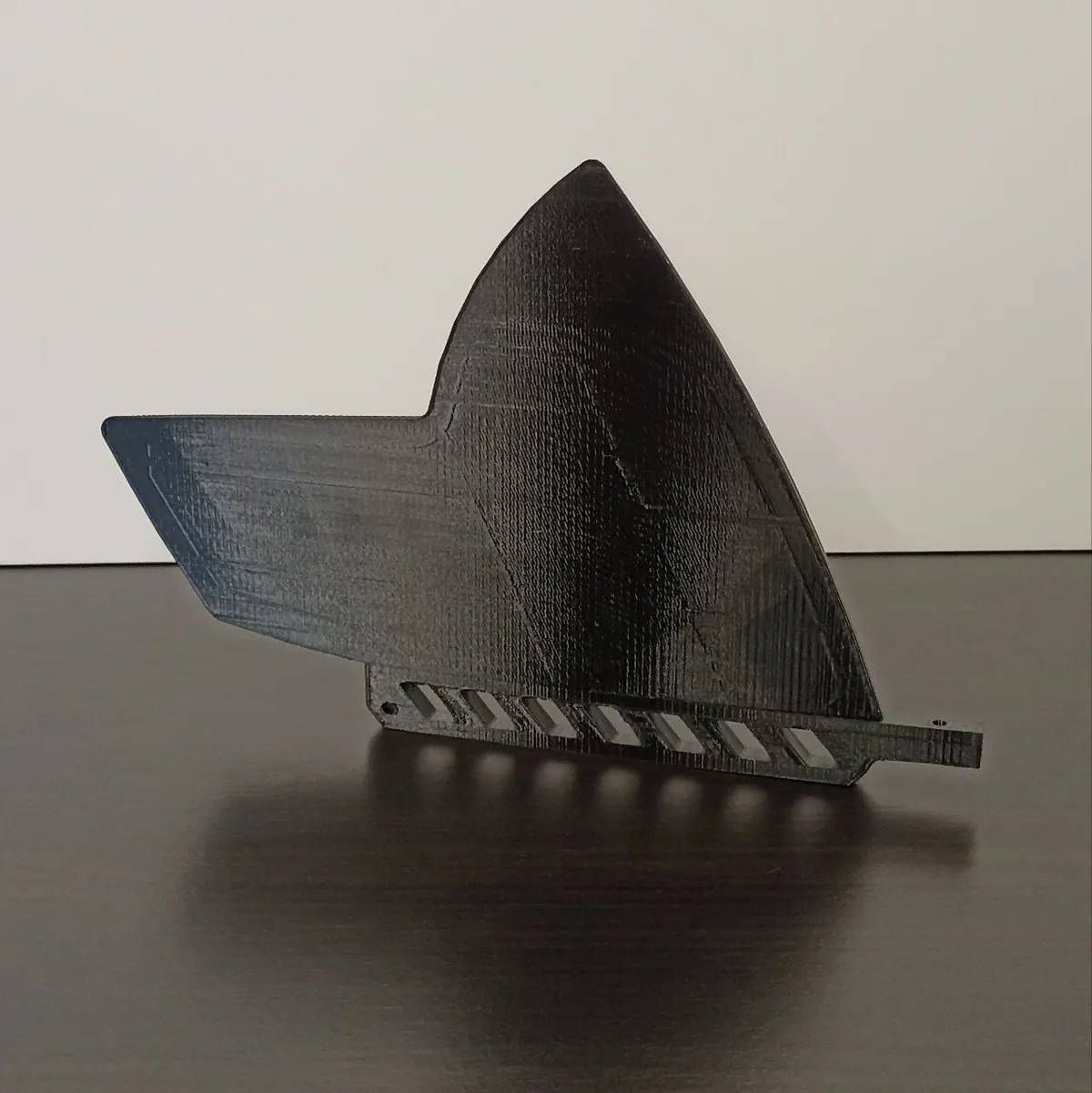
3D modelling turns an intuition into a visible form: we observe, test and refine before printing. Additive manufacturing imposes its own rules (orientation, tolerances, supports) that become a genuine grammar of volume. And each print becomes a tangible stage of the thinking: by handling the part, we sense whether the forms are right.
What it changes for creators
A design born of the dialogue with the material: create, print, observe, adjust — an iterative approach. To prototype is to think by making: each version brings answers and fresh questions. 3D printing also frees creation from the weight of the irreversible: we experiment without any major constraint.
When technique extends creativity
Each material (PLA, PETG, resin) has its own logic — strength, elasticity, texture — which must be understood from the modelling stage. A constant back-and-forth sets in between the virtual model and the final object. At Osmoz 3D, we model with Fusion 360, a parametric tool that links rigour and intuition; and tools such as Tinkercad introduce spatial thinking from the earliest age.
The Osmoz 3D approach
Designing in connection with the material means bringing aesthetics, usefulness and technical realism together. Linking modelling to local manufacturing creates a coherent chain from idea to realisation — test quickly, correct, start again. Thinking and making are no longer separate stages, but two facets of the same movement.
Going further: we design your object on our 3D design service. On the tool: CAD.