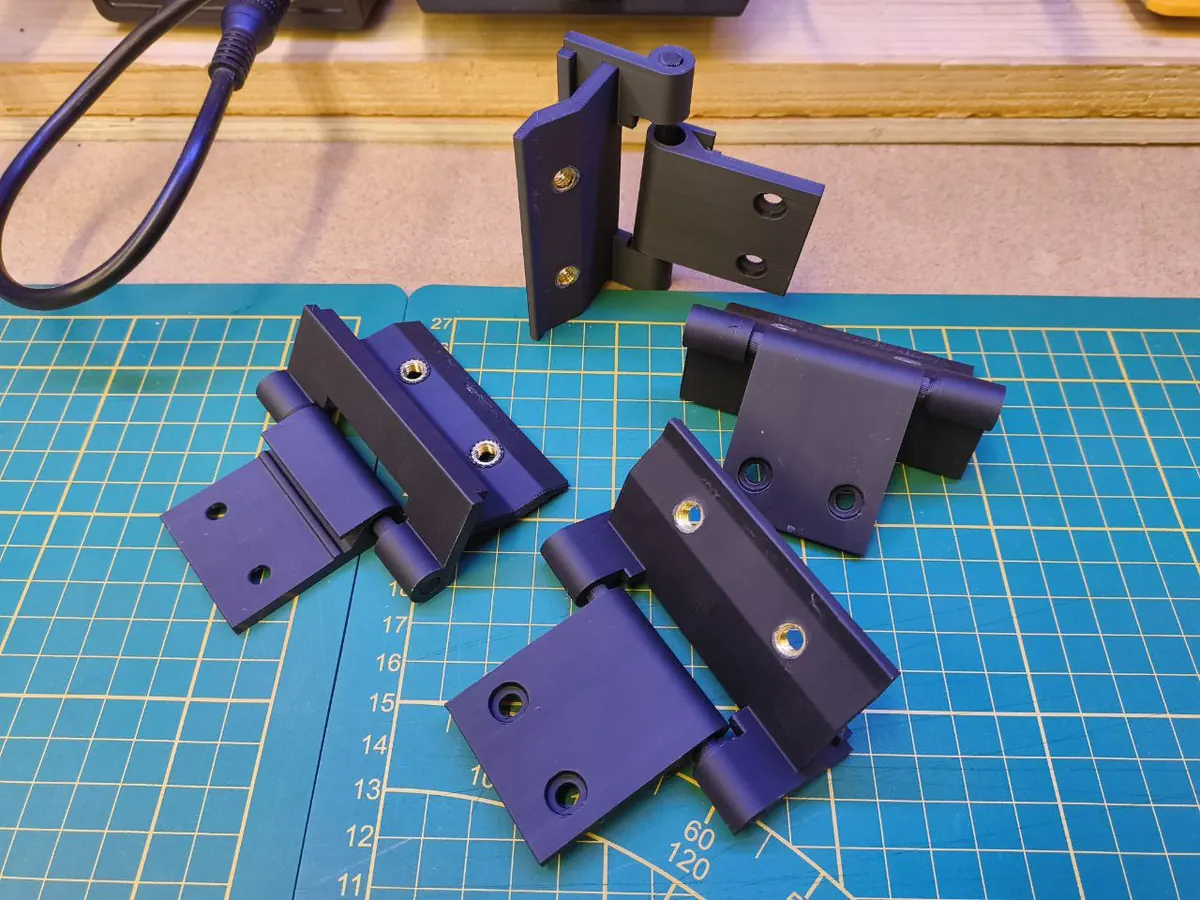
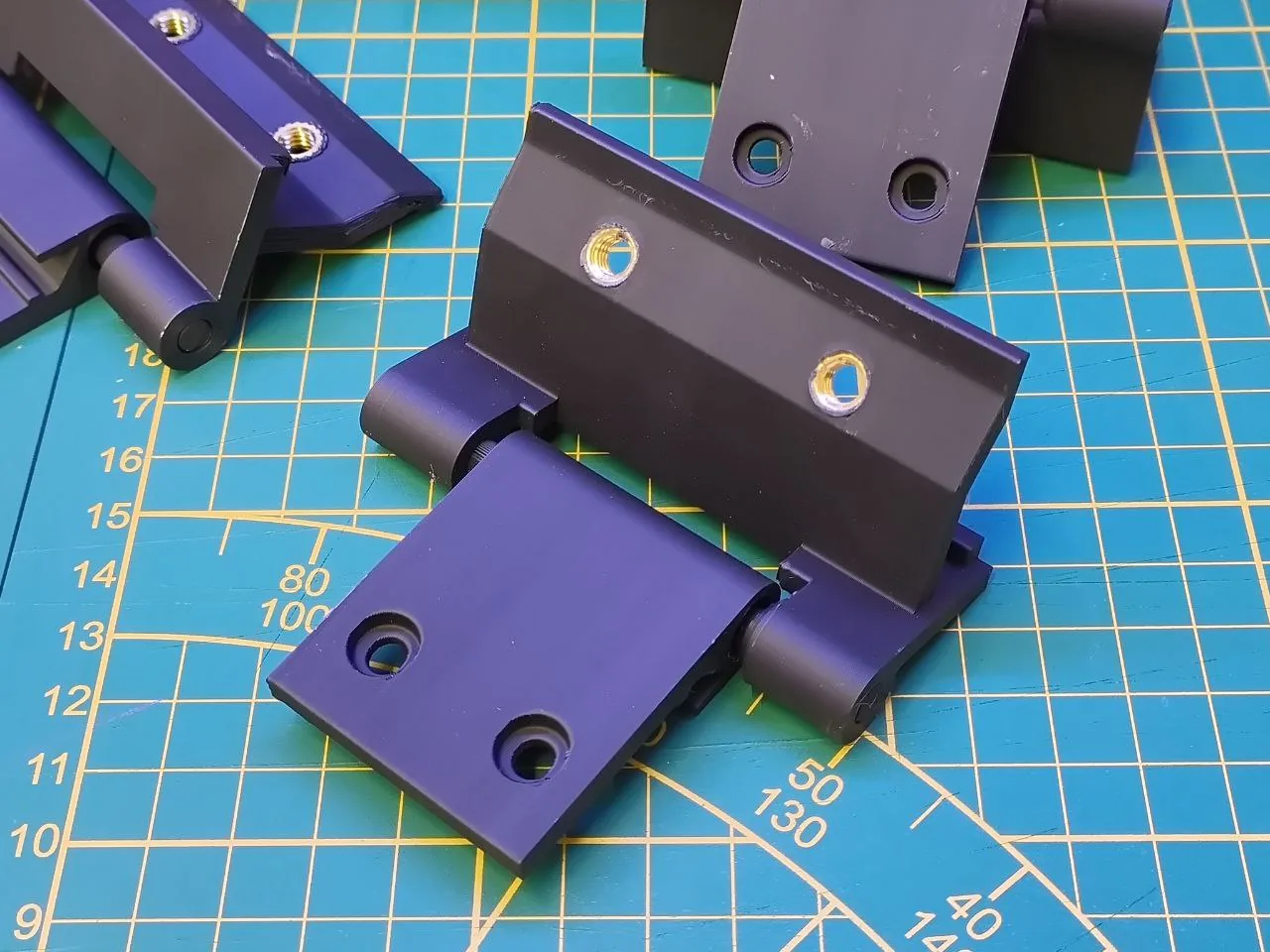
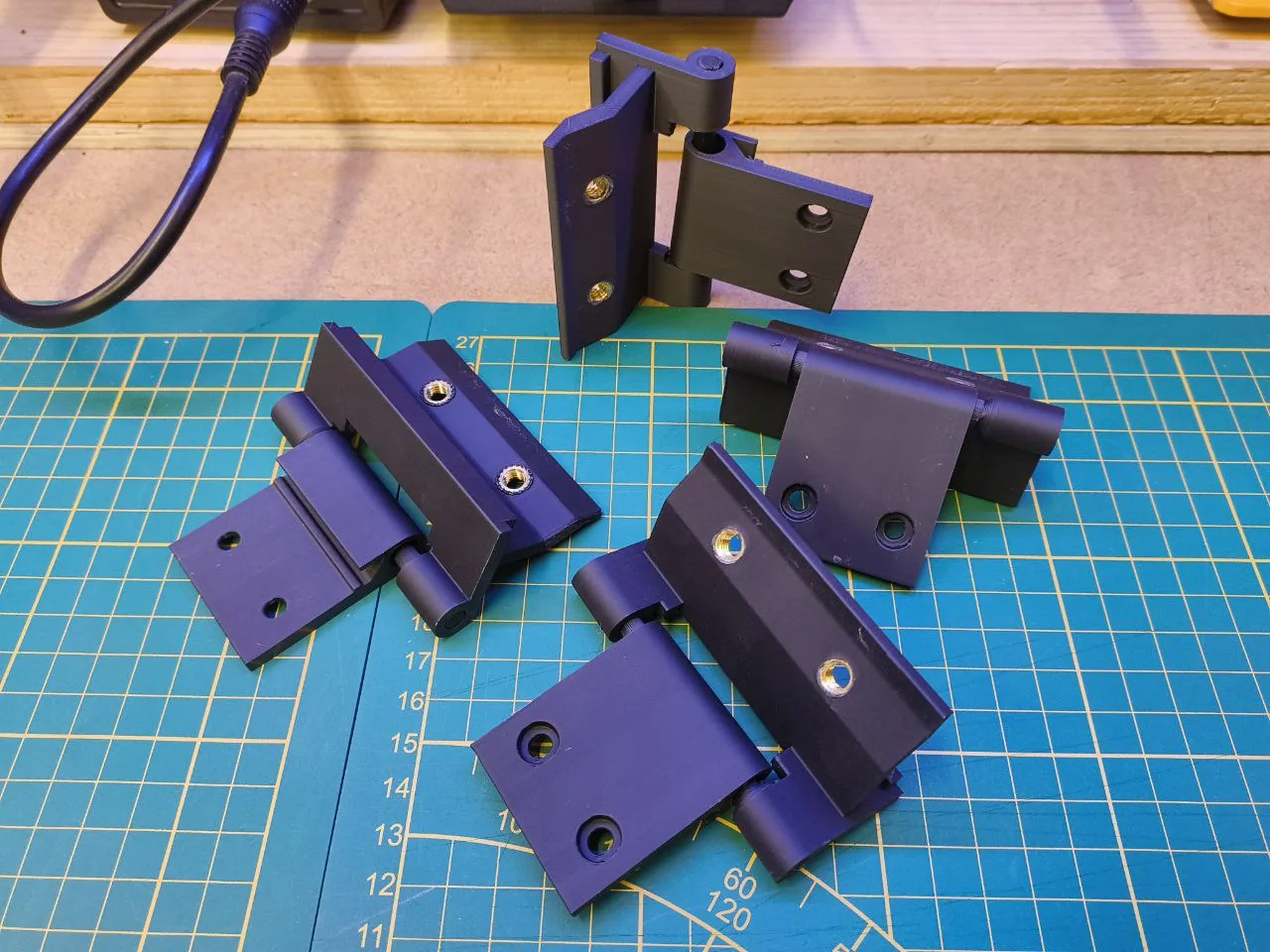
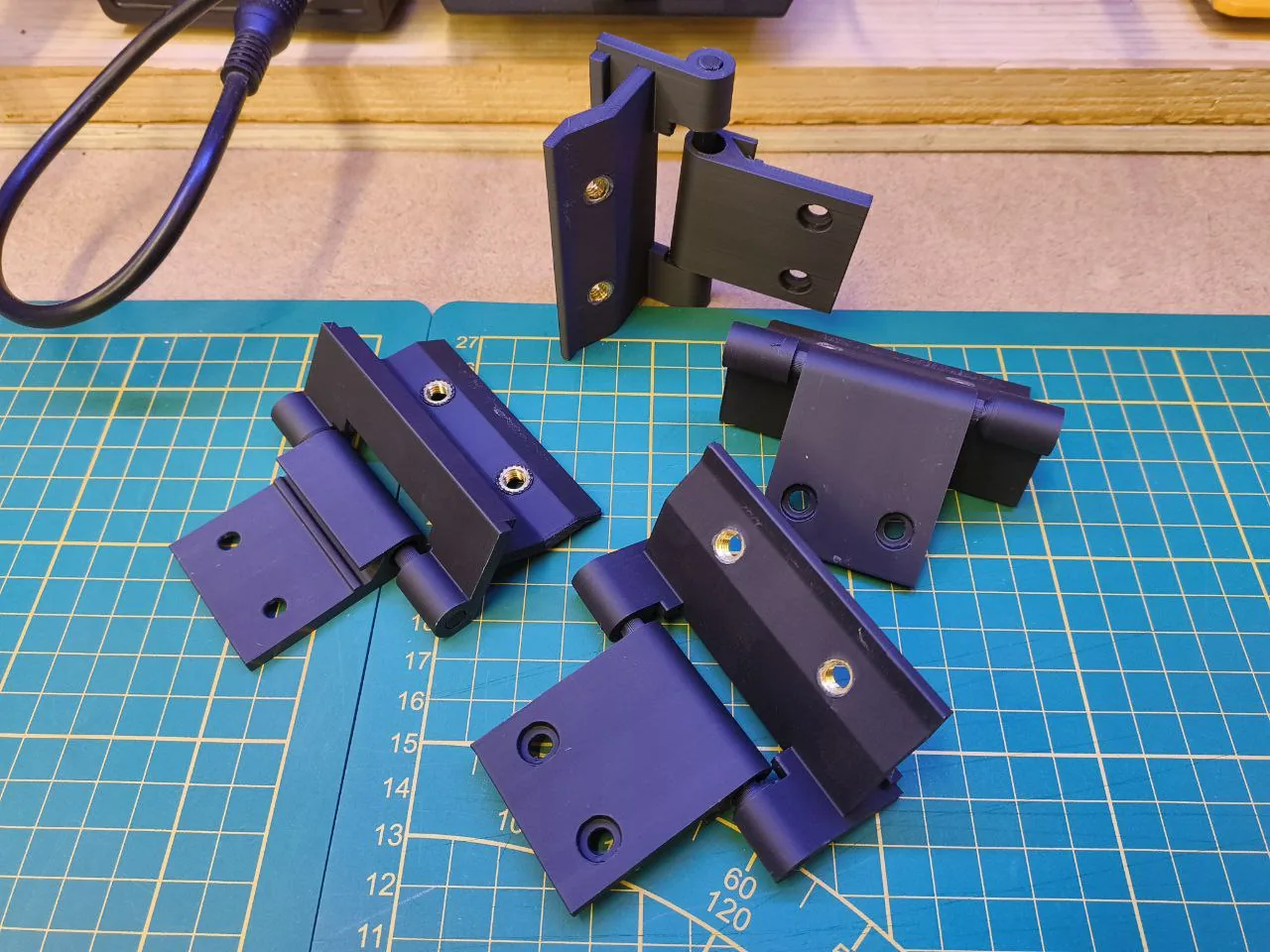
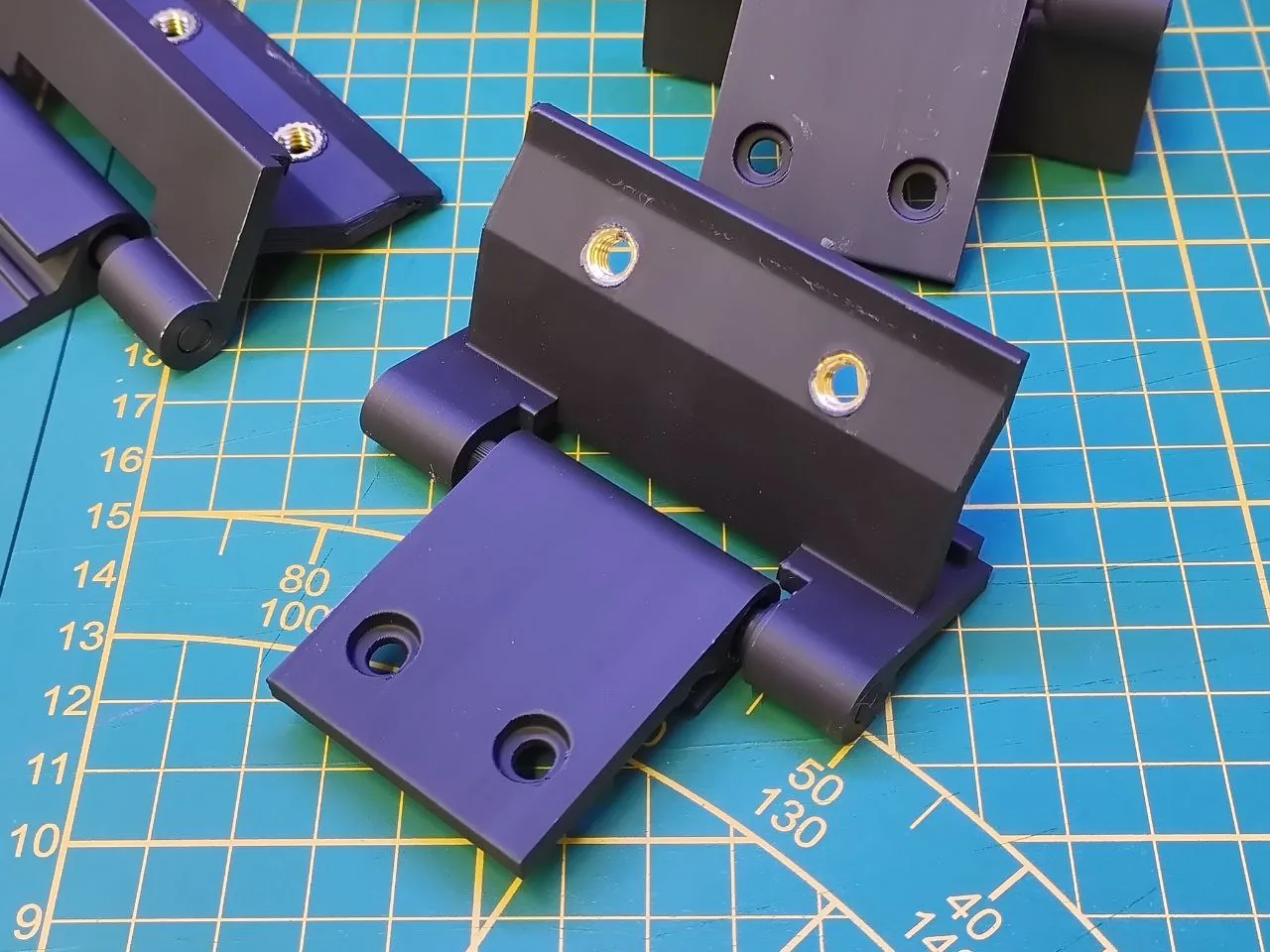
Replacing a door hinge some fifty years old, without any drawings — working solely from measurements taken off the original, partly worn part.
Ironmongery
Reproduction
FDM · PLA · metal insert
December 2024
// ClientPrivate individual
// SectorIronmongery
// TechnologyFDM · metal insert
// CompletedDecember 2024
Client's need
1
The brief – Bespoke replacement for an antique hinge
The client wanted to reproduce a door hinge around 50 years old, so as to replace the worn parts across all of his doors. The original part, though partly damaged, was supplied as a reference.
No file or drawing was available: the reproduction was carried out by hand, from precise measurements of the original part.
The main requirement was functional: the new hinge had to fit the door's other elements perfectly, to guarantee a solid and lasting hold.
2
The need – Restoring a pivoting function with an accessible solution
The hinge acts as the pivot point between the door and the wall, providing both the opening movement and the holding of the door in position. 3D printing stood out as a relevant solution because:
The part was no longer available to buy.
It allowed a bespoke small batch at a reasonable cost.
The client was keen to try out this manufacturing method.
3
Our goal – Fitting accuracy and durability over time
The project's main technical challenges were as follows:
Taking reliable measurements from a worn and partly deformed original part.
Guaranteeing a correct hold of the hinge once installed.
Ensuring good durability of the part, despite the plastic material.
Our response
1
First tests and iterative modelling
A first version of the part was modelled from the original hinge, despite its worn condition. The first print tests, produced in PLA, gave a broadly satisfactory result, with a good approximation of the dimensions. However, some details still need refining to ensure a perfectly functional assembly. A second part, in better condition, is expected in order to fine-tune the modelling and validate the critical areas. The final material has not yet been decided: it will depend on the complexity of the corrected model. Further trials are planned once the complete part is available.
Using the logo as the design base, with a 3D adaptation to give it depth.
Optimised layout to obtain 24 compartments integrated harmoniously.
Colour tests with the client to guarantee a perfect match with the brand's visual identity.
Precise alignment of the logo on the calendar, requiring meticulous adjustment.
Numerous exchanges with the client to validate every detail and ensure the design matched the brief perfectly.
2
Project follow-up – Regular communication and technical collaboration
Throughout the project, we placed the emphasis on transparent support and active communication with the client. Regular calls made it possible to clarify expectations and validate the technical directions.
The client was kept informed at every stage, in particular during the tests or the modelling adjustments.
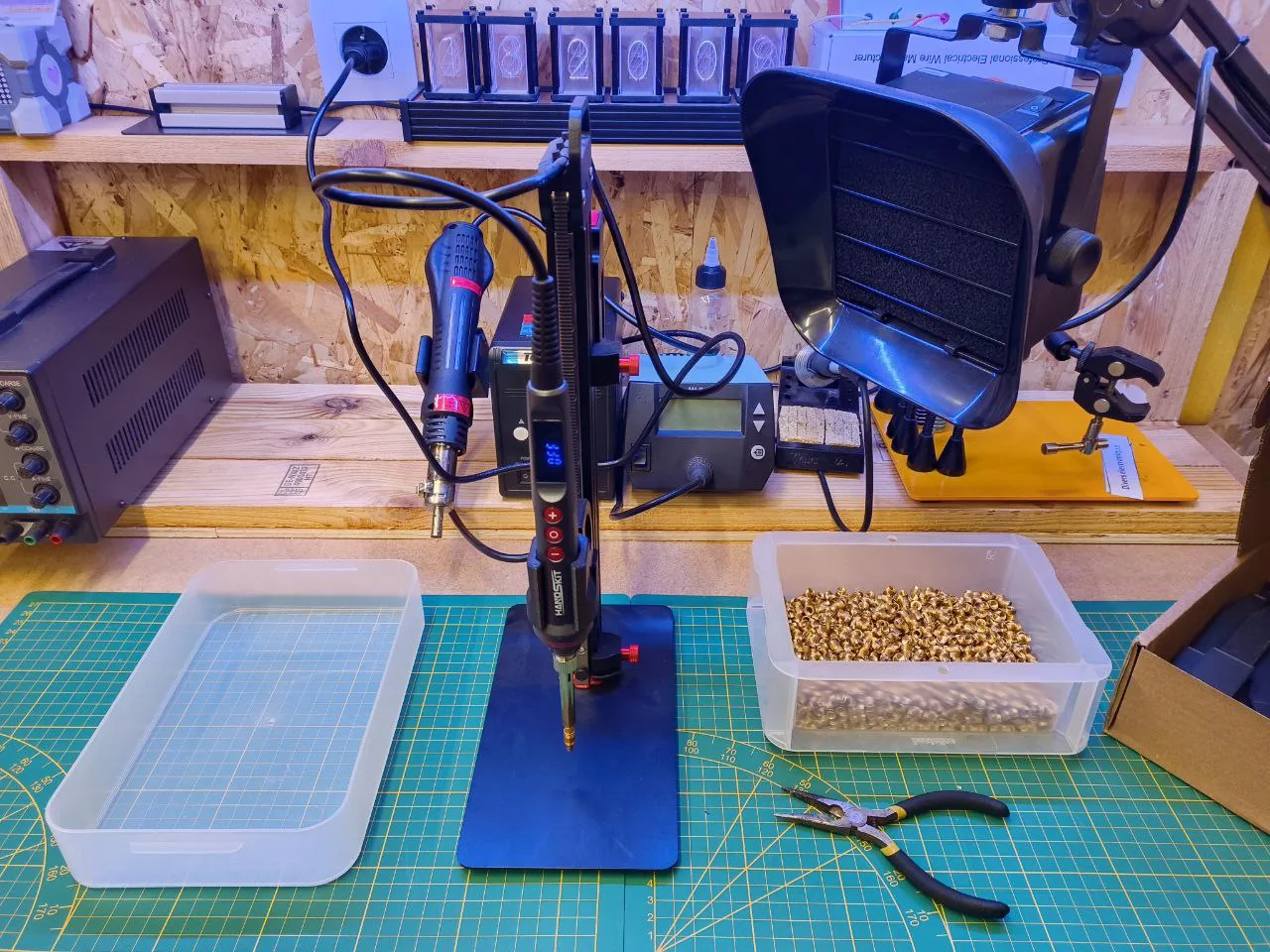
Trials were carried out with the fitting of metal inserts, to allow secure screwing once the hinge is installed.
Conclusion
Replacing the irreplaceable
A fifty-year-old piece of ironwork, without any drawings, put back into service from simple measurements. Reverse engineering serves heritage as much as repair.
In pictures
The project in pictures
A similar project to bring to life?
Tell us about your need — we'll get back to you with a recommendation and a quote.