← All projects Project · Automotive

Unobtainable automotive trim, reproduced

Reproducing a fog-light trim for a rare vehicle, with no original part or manufacturer file — just a photo of a slightly different model.

  • Automotive
  • Reproduction
  • FDM
  • June 2025
Unobtainable automotive trim, reproduced
// SectorCar repair
// Technology3D modelling · FDM
// CompletedJune 2025

Understanding the need: the starting point

1

The request

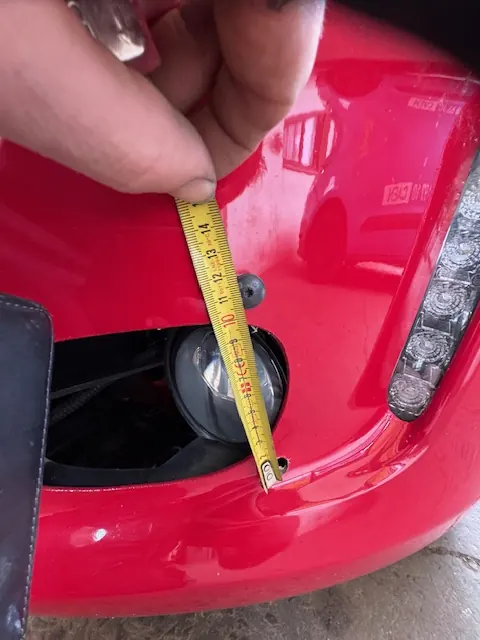
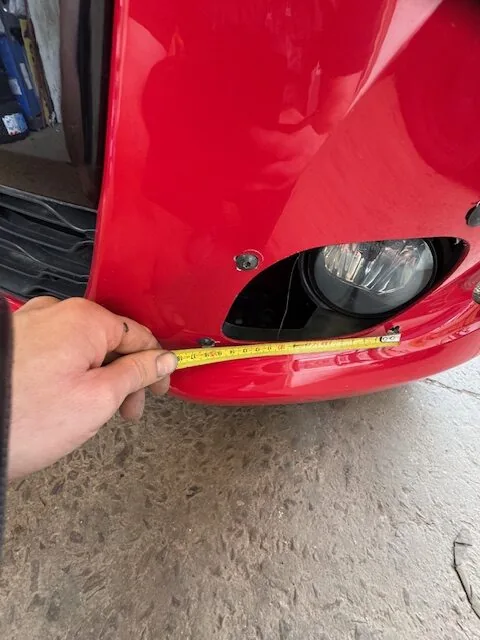
The company Alliance Expert approached us to reproduce a fog-light trim following an accident on a rare vehicle, produced in a small batch. The problem: the original part was unobtainable, no manufacturer file was available, and the only visual to hand at the start came from a photo of a model slightly different from the actual part. The aim was to offer a faithful, functional and attractive replacement, to allow the vehicle to be restored.
The request
2

The need

The project came with several demanding constraints:

  • A non-standard part, not referenced by the manufacturer, with no 3D file available
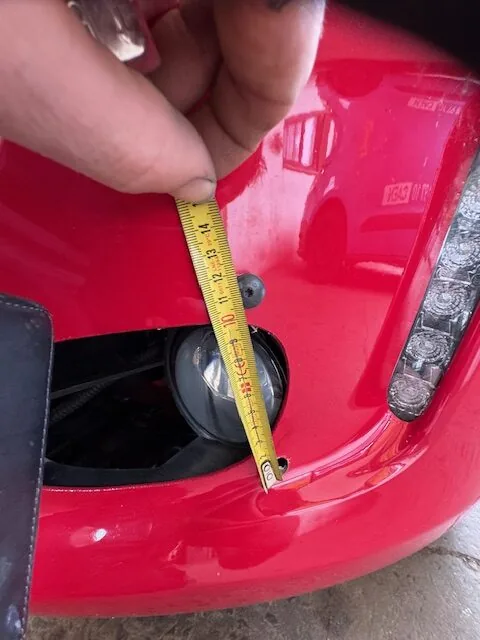
  • A complex, curved shape that was hard to measure by hand
  • An initial request based on a photo of a different model, a source of errors
  • Remote work, with no direct access to the vehicle
The need
3

Our objective

The challenge was to reproduce a rare part with a complex geometry and no reliable source data. Our objective was threefold:

  • Validate an initial modelling base by generating a realistic model via MakerWorld
  • Work closely with an expert partner able to refine this base into a functional model
  • Adjust the critical points, notably the fixing lugs, by comparing the part with its available mirror image
Our objective

The highlights of the project

1

Initial analysis and base modelling

The starting point was especially tricky: the client sent us a photo of a part model different from the one actually fitted to the vehicle. To work around the missing manufacturer drawing:

  • We took photos of the existing part placed on a measuring mat, to estimate its dimensions as accurately as possible.
  • We then generated a base 3D model with the MakerWorld tool, from a video filmed by the client.
  • This model was passed to our surface-modelling partner, who used it as a starting point to design a more precise version.
Initial analysis and base modelling
2

Tests, adjustments and mirror work

Once the first version had been modelled:

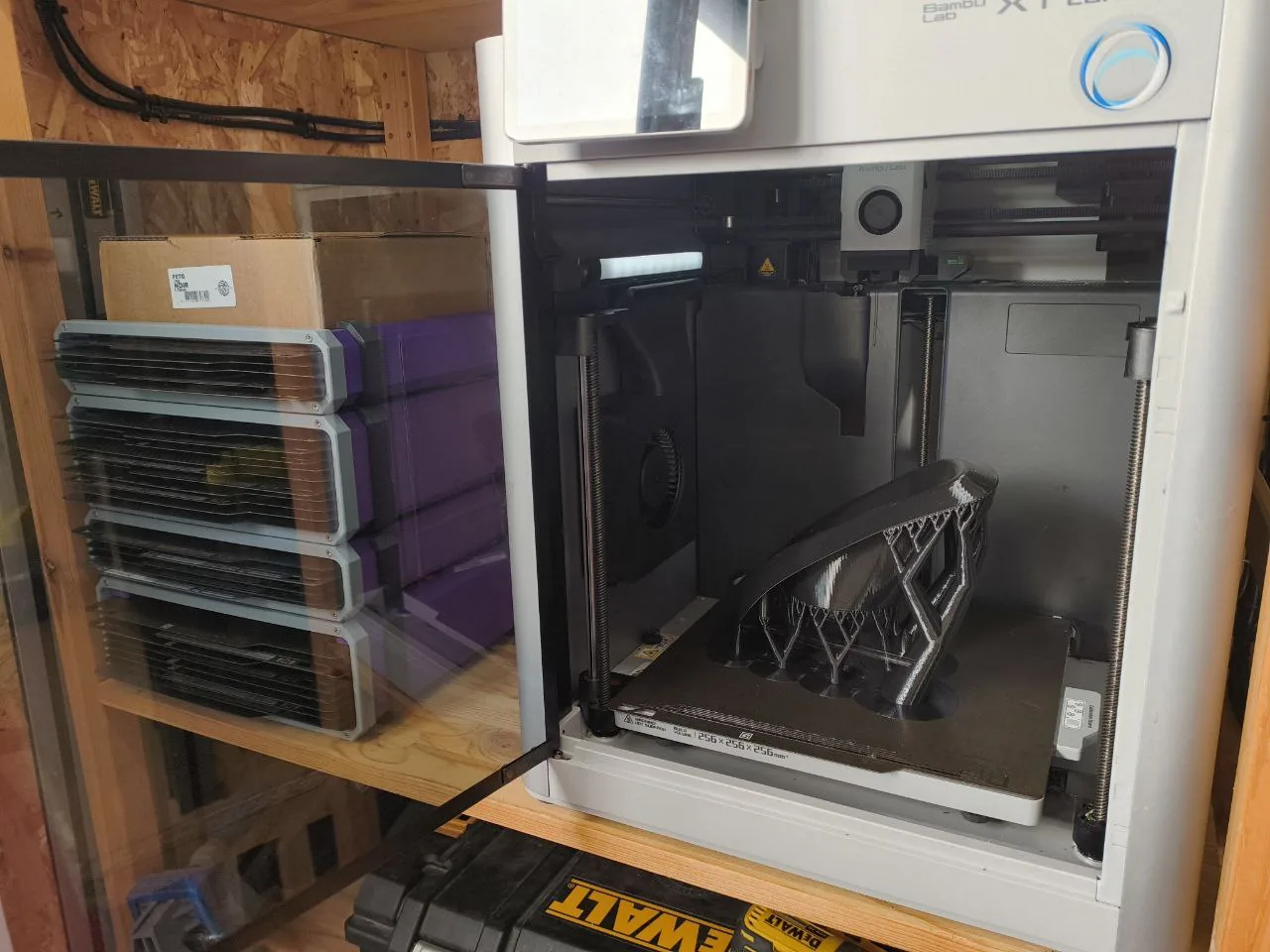
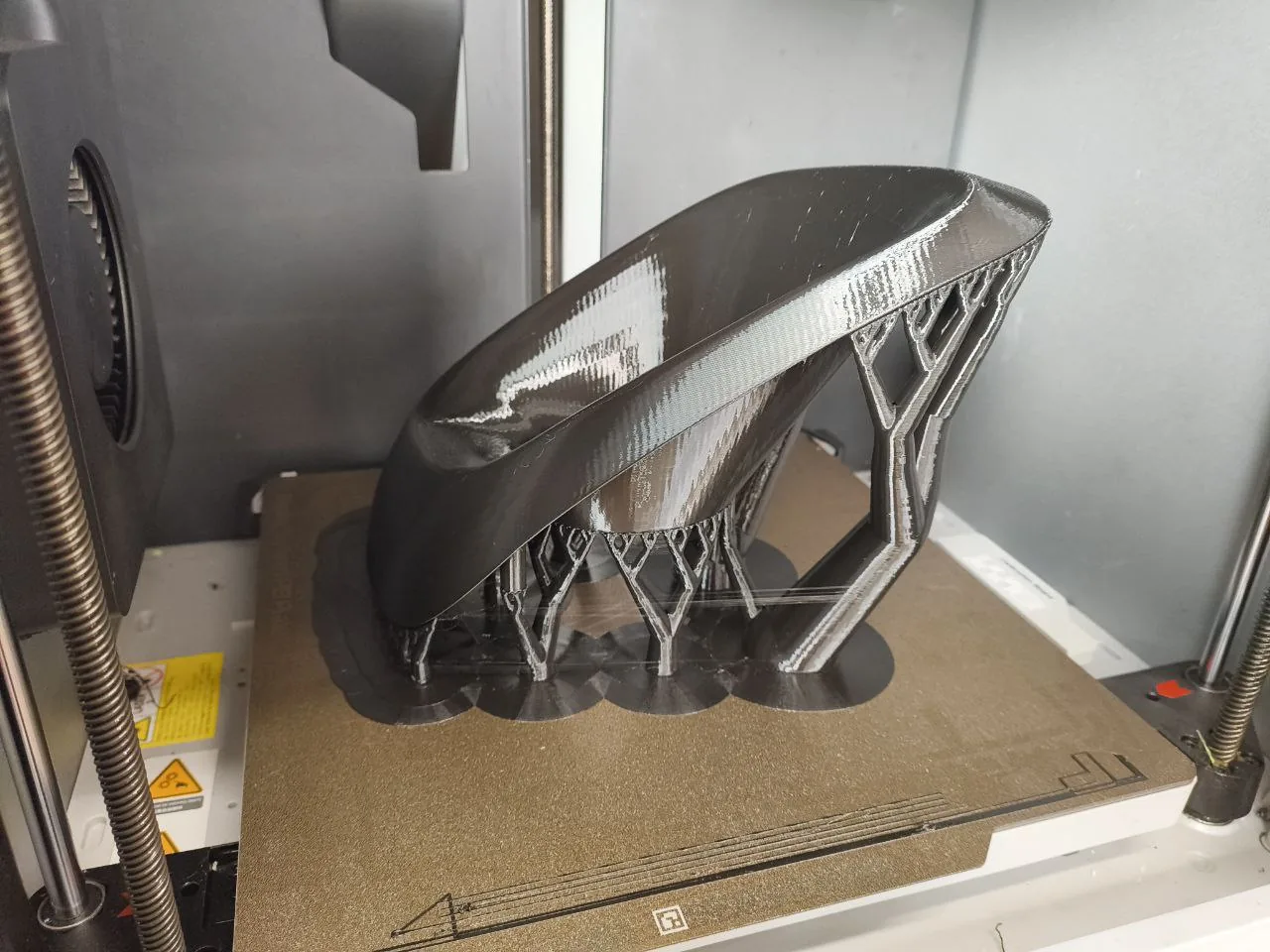
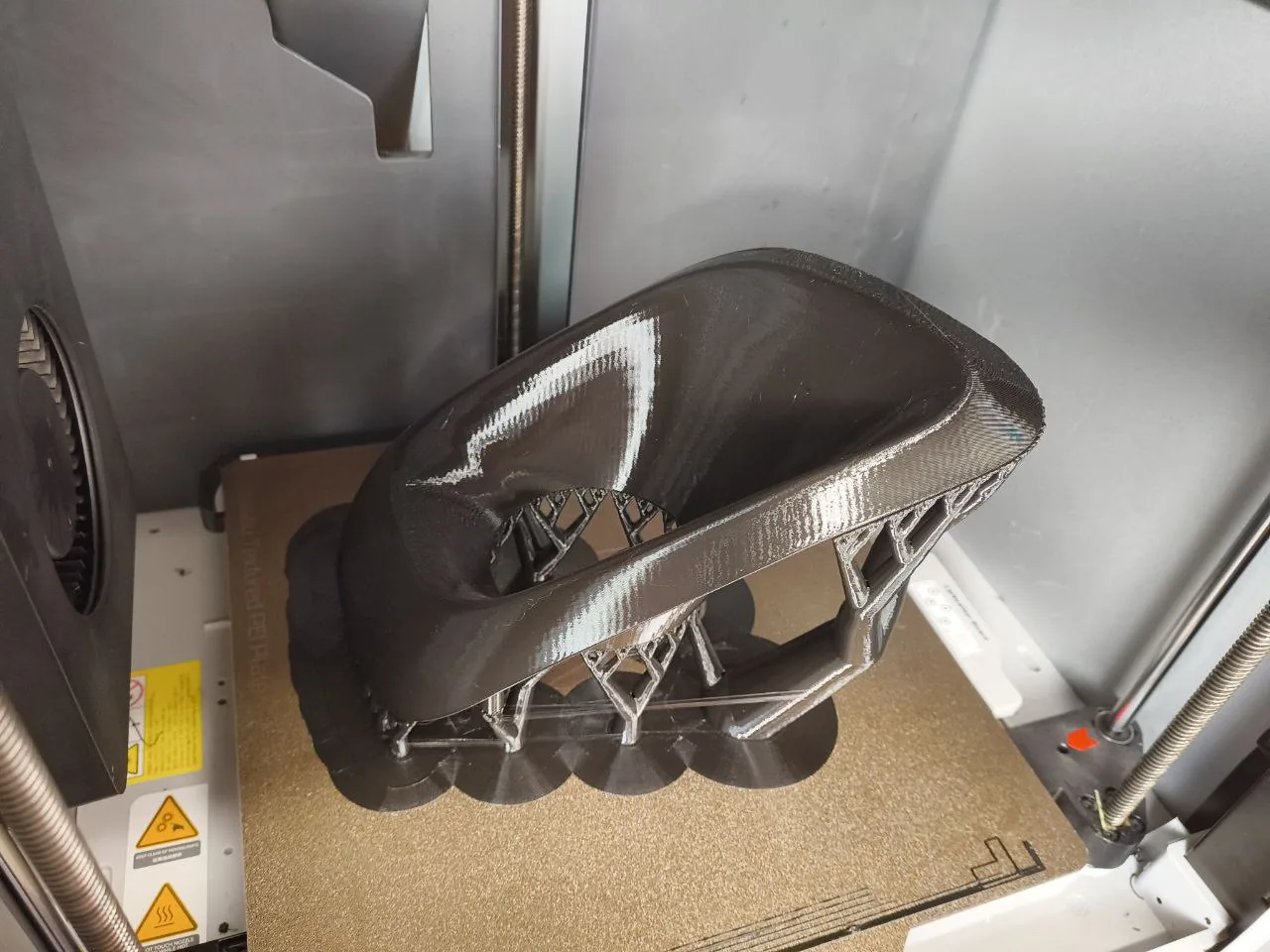
  • We printed a first prototype to validate its dimensions and fixing points.
  • The outer shape matched the actual part well, but the fixing lugs were misplaced, preventing correct installation.
  • As we only had photos and the opposite (mirror) part, we printed a second copy of the same side to compare it physically with the mirror part.
  • This direct comparison let us make manual adjustments to correct the geometry and reposition the lugs.
Tests, adjustments and mirror work
3

Final sign-off and delivery

After many rounds of adjustment:

  • The corrected 3D model was printed as a mirror version to match the vehicle's missing part.
  • The final part fitted correctly on the vehicle during the acceptance test, despite the constraints of having no manufacturer model.
  • Started from a single photo, the project required more than a year of work across several stages: photos, trials, collaborative modelling, test prints, adjustments.
  • It helped build a genuine relationship of trust with Alliance Expert, a team that bridges garages and insurers on complex repairs.
  • This collaboration shows that with time, perseverance and in-depth technical dialogue, even highly constrained projects can reach a bespoke solution.
Final sign-off and delivery
Conclusion

Rebuilding without a drawing or original part

From a simple photo and a few measurements, you work back to the file and then the part. Enough to restore a rare vehicle when the manufacturer no longer supplies it.

A similar project to bring to life?

Tell us about your need — we'll get back to you with a recommendation and a quote.

Request a quote